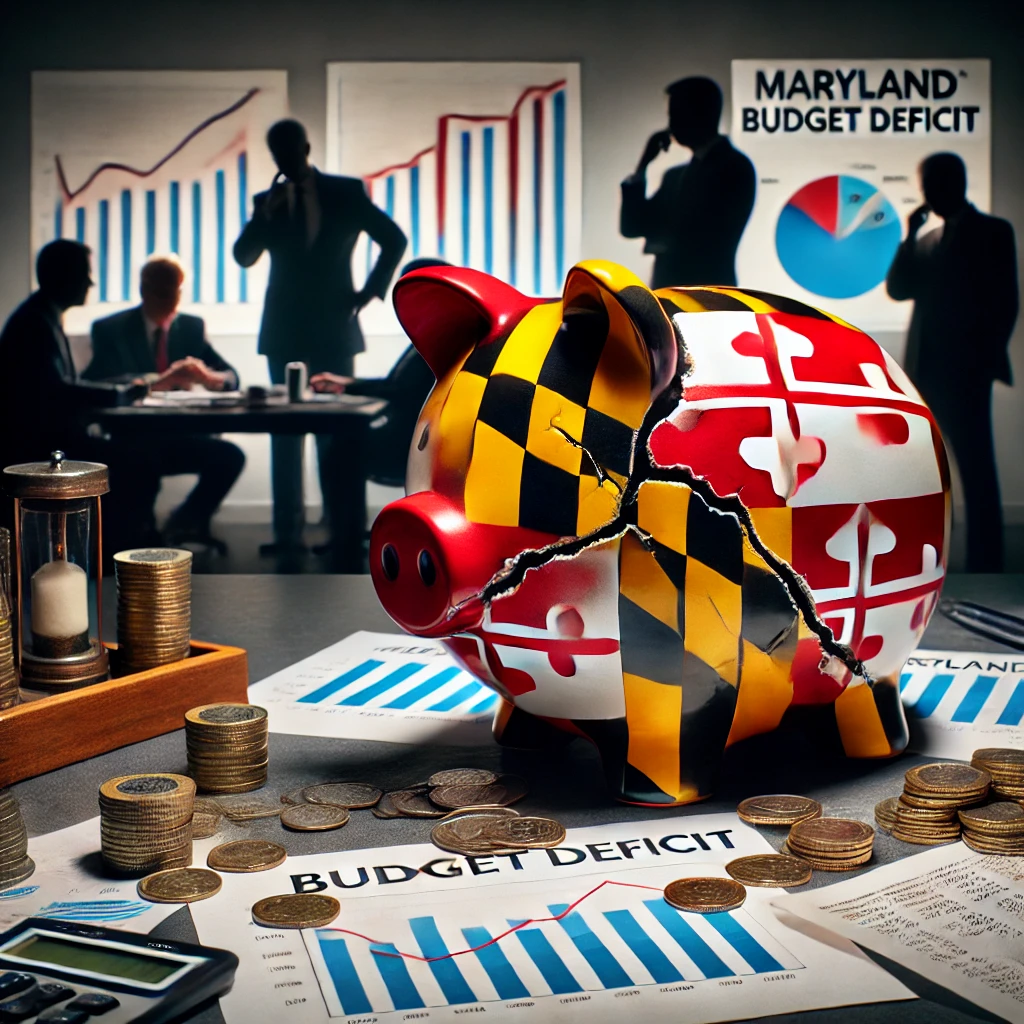
Maryland is facing a budget deficit of roughly $3 billion, raising concerns about the state’s financial health. This shortfall has led to speculation that the state is “broke” or on the verge of economic collapse. However, while a budget deficit is a serious issue, it does not necessarily mean that the state is out of money. Instead, it highlights a gap between spending and revenue that needs to be addressed—how that is done remains a subject of debate.
What a Budget Deficit Really Means
A budget deficit occurs when government spending exceeds the revenue it collects, and in Maryland, that gap has been widening. Increased costs in areas such as healthcare, education, and public services, coupled with slower-than-expected revenue growth, have contributed to the shortfall. While state officials have pointed to external economic conditions as a key factor, some argue that years of policy choices—such as spending commitments that outpaced revenue growth—have played a significant role.
Although the deficit raises fiscal concerns, Maryland still has income streams from taxes, fees, and federal support, meaning it continues to function financially. Additionally, the state has reserve funds intended to soften the impact of economic downturns. Whether these reserves are sufficient or being used appropriately is another question.
How the State Plans to Address the Deficit
The state government has put forward a mix of proposals to close the gap, including spending reductions and adjustments to the tax system. Some of the proposed cuts involve scaling back funding for government programs, while tax policy changes suggest a shift in the burden—raising taxes on higher-income earners while offering some relief to lower- and middle-income residents. Whether this approach is the most effective or fair remains up for debate. Critics argue that excessive spending, rather than insufficient revenue, is at the root of the problem, while others believe the state should look for alternative ways to boost revenue without raising taxes.
Moreover, discussions around government efficiency have resurfaced, with some questioning whether existing resources are being managed properly. While officials insist they are making responsible decisions, skepticism remains over whether the proposed solutions truly address the underlying issues or simply serve as temporary fixes.
Is Maryland Really ‘Broke’?
Despite the deficit, Maryland is far from being bankrupt. The state still has access to revenue streams and financial tools to manage shortfalls. However, the way the deficit is being handled has significant implications for residents. Some fear that tax increases, even if targeted at wealthier individuals, could have unintended economic consequences, while others worry that spending cuts could weaken essential services.
Ultimately, the real question is not whether Maryland is broke, but whether its leaders are taking the best approach to balancing the budget. While the government insists its strategy is sound, there is reason for the public to scrutinize these decisions and push for solutions that prioritize long-term stability over short-term fixes.