Maryland Driverless Car Bill Sparks Debate Over Who Pays When Crashes Happen
Maryland lawmakers are considering legislation that would allow fully autonomous, driverless vehicles to operate on public roads across the state.
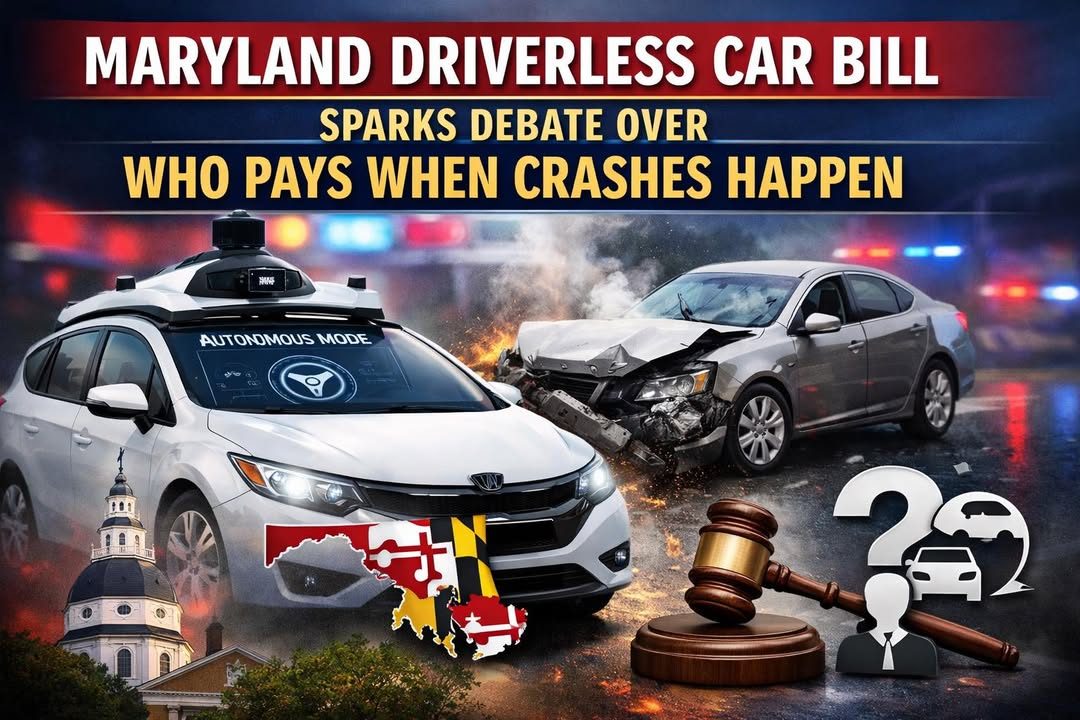
Maryland lawmakers are considering legislation that would allow fully autonomous, driverless vehicles to operate on public roads across the state. While supporters say the technology could improve safety and mobility, critics warn the bill raises significant legal questions—particularly about who is responsible when a crash happens.
What the Bill Would Do
The proposed legislation, Senate Bill 909, would authorize vehicles equipped with fully automated driving systems to operate on Maryland roads without a human driver behind the wheel. The bill establishes a framework for companies to deploy autonomous vehicles while requiring certain safety measures and insurance coverage.
Under the proposal, companies operating driverless vehicles would need to:
- Maintain proof of insurance and financial responsibility
- Provide a first responder interaction plan so emergency personnel know how to handle the vehicles during accidents or roadside situations
- Ensure vehicles can safely stop if the automated system fails
Autonomous vehicles would still be required to follow Maryland traffic laws and accident reporting requirements.
Supporters of the bill say Maryland needs clear regulations so emerging transportation technology can operate legally and safely in the state.
Supporters Say Technology Could Improve Safety
Advocates for autonomous vehicles argue the technology has the potential to reduce crashes caused by human error, which accounts for the majority of roadway accidents.
Companies developing autonomous driving systems claim their vehicles can respond faster than human drivers and eliminate risks like distracted driving, intoxication, or fatigue.
Supporters also point to the potential benefits for people who cannot drive, including individuals with disabilities and older adults who may rely on transportation services to remain independent.
Critics Raise Liability Concerns
Despite those potential benefits, the proposal has drawn criticism from legal experts and labor organizations who say the bill does not clearly define liability when crashes occur.
One provision in the legislation states that when the automated driving system is engaged, the system itself is considered the vehicle’s operator for the purpose of following traffic laws.
Critics argue that could create confusion in court if a crash happens. Instead of a human driver being responsible, questions could arise about whether liability falls on the vehicle manufacturer, the software developer, or the company operating the vehicle.
Opponents warn that accident victims could face a complicated legal process when seeking compensation.
Concerns About Job Loss
Labor groups have also expressed concern about the potential impact autonomous vehicles could have on workers who rely on driving for their livelihood.
Rideshare drivers, delivery drivers, and trucking professionals could all face disruption if autonomous fleets become widespread.
Some labor representatives have urged lawmakers to slow down the legislation until clearer protections are in place.
What Happens Next
The bill is still under consideration in the Maryland General Assembly and could undergo changes as lawmakers review testimony and public input.
If approved, the legislation could take effect later this year and open the door for driverless vehicles to begin operating on Maryland roads.
For now, the debate highlights a growing challenge facing lawmakers nationwide: balancing the promise of new technology with questions about safety, accountability, and the future of work.